
How to Import Machines from China to the USA
Current Options and Expert Guide
Importing machinery from China can lower equipment costs, expand production capacity, and give access to custom-built machines that may not be available locally. It can also become expensive fast if the product is misclassified, the supplier cuts corners, or the shipment gets stopped at the port.
The best approach is to treat the import as a controlled project, not a simple online purchase. The process involves supplier vetting, technical verification, payment protection, freight planning, customs clearance, tariffs, safety rules, and final delivery inside the United States.
This guide explains the current ways to import machines from China to the USA, the documents you need, the shipping options, the customs risks, and the practical steps that reduce delays and surprises.

Choose the right import option for your situation
There is no single best way to import a machine from China. The right path depends on the machine type, order value, customization level, urgency, and how much risk you can manage.
Buy directly from a Chinese factory
Factory-direct buying gives you the most control over specifications, accessories, branding, testing, and price negotiation. It is common for CNC machines, packaging lines, woodworking machines, textile equipment, laser cutters, food processing machines, and production line components.
Best when:
You know the technical requirements.
You can review drawings, videos, manuals, and test reports.
You are ordering a high-value machine or repeat units.
You can manage inspection, freight, and customs with help from a broker or forwarder.
Main risk:
You carry most of the import responsibility unless the contract clearly assigns it.
Use a sourcing agent or purchasing company
A China-based sourcing agent can find suppliers, compare quotes, visit factories, arrange inspections, and coordinate shipping. This can help when the machine is customized or when you cannot verify the supplier yourself.
Best when:
You are new to importing.
You need multiple machines or parts from several suppliers.
You need someone on the ground to check the factory.
You want help translating technical requirements.
Main risk:
Some agents receive commissions from suppliers. Use written agreements and require transparent pricing.
Buy through B2B platforms
Marketplaces such as Alibaba, Made-in-China, and Global Sources make it easier to identify suppliers and request quotes. They are useful for early research, but they do not replace due diligence.
Best when:
You want to compare many suppliers quickly.
You are buying standard machines.
You want platform messaging and some payment protection options.
Main risk:
Listings may not show the actual manufacturer. Confirm the legal entity, factory address, export history, and machine details before paying.
Work with a U.S. importer or distributor
Some Chinese machines are already represented by U.S. distributors. This option usually costs more than importing directly, but it can reduce risk.
Best when:
You need local support, installation, warranty service, or spare parts.
You cannot afford port delays.
You need equipment that meets U.S. buyer, insurer, or facility requirements.
Main risk:
The purchase price may include a larger margin, and customization may be limited.
Import used or refurbished machinery
Used machines from China can be available through factories, dealers, auction channels, or liquidations. This route needs extra care because age, wear, software access, and missing parts can create major problems.
Best when:
You can inspect the machine in person or through a qualified inspector.
You can confirm serial numbers, condition, manuals, and spare parts.
You understand U.S. import restrictions that may apply to the machine.
Main risk:
Used machinery may arrive damaged, incomplete, or noncompliant if the seller provides poor documentation.
Confirm the machine can legally enter the United States
Most machinery does not require a general U.S. import license, but that does not mean every machine can enter freely. The key is to identify all rules that apply before production or shipment.
For anyone learning how to import machines from China to the USA, this is the step that prevents the most expensive mistakes.
Classify the machine under the HTS code
Every imported product needs a Harmonized Tariff Schedule code, usually called an HTS code. This code determines the base duty rate and helps identify extra rules.
A customs broker can help classify the machine, but the importer of record is responsible for accuracy. Do not rely only on the supplier’s suggested HS code. Chinese export codes and U.S. import classifications can differ.
Classification depends on details such as:
Machine function
Power source
Main material
Industry use
Automation level
Accessories shipped with the machine
Whether the shipment is a complete machine or parts
Check tariffs and trade remedies
Machines imported from China may face normal duties plus additional tariffs. Many Chinese-origin goods have been subject to Section 301 tariffs, and some products may face anti-dumping or countervailing duties.
Do not assume the duty rate from a marketplace quote is correct. Ask a licensed customs broker to review:
HTS classification
Country of origin
Section 301 applicability
Anti-dumping and countervailing duty exposure
Possible exclusions or special treatment if available
A low machine price means little if the landed cost does not include duties, tariffs, exams, inland freight, and installation costs.
Review agency rules beyond customs
Some machines involve other U.S. agencies or standards. The exact rules depend on what the machine does.
Common examples include:
Machine feature | Possible U.S. concern |
Gasoline or diesel engine | EPA emissions requirements may apply |
Radio, Bluetooth, Wi-Fi, or remote control | FCC rules may apply |
Food contact equipment | FDA-related concerns may apply |
Medical or laboratory use | FDA or other agency rules may apply |
Vehicle or road-use equipment | DOT or NHTSA issues may apply |
Wood packaging | ISPM 15 treatment and markings are required |
OSHA does not usually clear goods at the port, but U.S. workplace safety rules matter once the machine is installed. Many buyers also need equipment that meets electrical and safety expectations from insurers, local inspectors, or customers. UL, ETL, CSA, or CE marks are not interchangeable, so confirm what your facility actually requires.
Vet the supplier before you pay
A professional-looking website does not prove that the supplier can build and export a safe machine. Verification should happen before deposit payment.
Ask for:
Business license and export registration
Factory address and production photos
References from buyers in the United States or similar markets
Machine videos showing the exact model in operation
Manuals, wiring diagrams, spare parts lists, and maintenance schedule
Test reports and quality certificates where relevant
Warranty terms in writing
Lead time and packaging details
Clear list of included accessories and excluded items
For higher-value equipment, arrange a factory audit or third-party inspection. A pre-shipment inspection can check visual condition, dimensions, voltage, labeling, accessories, packaging, and limited function testing. For complex machinery, hire an inspector with technical experience in that equipment type.
Specify the machine clearly in the purchase contract
Many import problems start with vague purchase orders. The contract should describe the machine in detail and include measurable acceptance standards.
Include:
Full model name and configuration
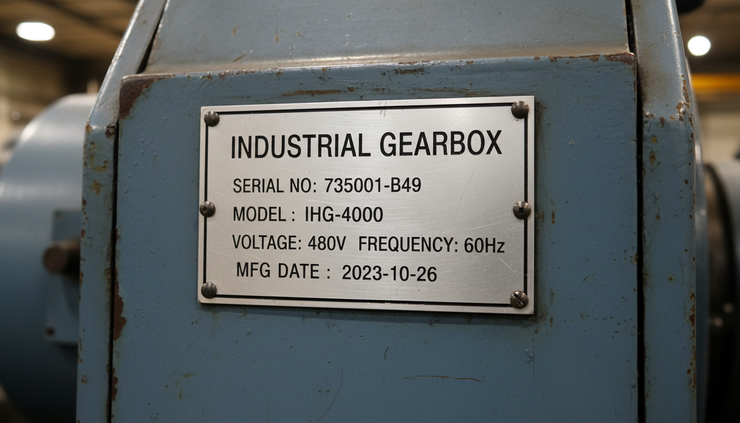
Voltage, phase, plug type, and frequency for U.S. use
Software language and controller type
Production speed or capacity
Tolerance, accuracy, or output requirements
Tooling, molds, blades, or spare parts included
Safety guards, emergency stops, and sensors
Manuals in English
Packaging method
Incoterms
Warranty and spare parts support
Inspection and acceptance process
Payment schedule
Dispute process
For U.S. facilities, voltage is a common issue. Confirm whether the equipment must run on 110V, 220V, 240V, 480V, single-phase, or three-phase power. Also confirm whether the machine needs air compressors, chillers, dust collection, water supply, drainage, ventilation, or foundation work.
Choose the right Incoterm
Incoterms define which party handles cost and risk at each stage of shipping. They do not replace a full contract, but they matter.
Incoterm | What it means in practice |
EXW | You collect from the supplier’s premises and handle nearly everything |
FOB | Supplier delivers goods to the China port and clears export customs |
CIF | Supplier pays ocean freight and insurance to the U.S. port, but you handle arrival and import |
DAP | Supplier arranges delivery to a named U.S. place, excluding import duties and taxes unless agreed |
DDP | Supplier claims to deliver duty paid to your door |
For most first-time machine importers, FOB Chinese port is often a practical choice. It lets the supplier handle local export steps while your freight forwarder controls the main shipping, U.S. arrival, customs coordination, and delivery.
Be careful with DDP offers. Some are legitimate, but some use unclear customs arrangements, weak documentation, or unrealistic duty assumptions. If you are the real buyer and will use the machine in the United States, you usually want clean import records and proper entry documentation.
Plan shipping based on size, urgency, and risk
Machinery can ship by ocean, air, express courier, or project cargo service. The best option depends on dimensions, weight, value, deadlines, and whether the machine is fragile.
Ocean freight is the standard choice
Most machines ship by sea because it is the most cost-effective option for heavy cargo.
Common ocean options include:
FCL A full container load, often best for one large machine or several units.
LCL Less than container load, useful for smaller machinery, though handling risk can be higher.
Flat rack or open-top container Used for oversized equipment that does not fit inside a standard container.
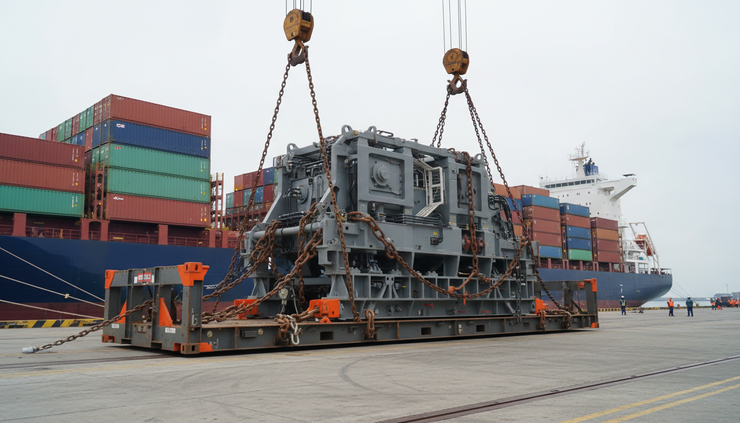
Breakbulk or project cargo Used for very large machines that need special loading, bracing, cranes, or permits.
Air freight is for urgent or high-value shipments
Air can work for smaller machines, critical spare parts, or urgent production needs. It is usually far more expensive than ocean freight and may have strict size and weight limits.
Courier works only for small equipment or parts
Express services can handle small machines, controllers, sensors, and parts. They are not suitable for most industrial machinery, but they can be useful for samples or replacement components.
Prepare the import documents
Clear documentation helps customs, ports, truckers, warehouses, and your accounting team. Missing or inconsistent documents can trigger delays and exams.
Typical documents include:
Document | Why it matters |
Commercial invoice | Shows seller, buyer, value, goods description, currency, Incoterm, and country of origin |
Packing list | Shows weight, dimensions, crate count, and packaging details |
Bill of lading or air waybill | Proves transport details and control of cargo |
Arrival notice | Alerts the consignee or broker that cargo is arriving |
Customs bond | Required for formal entries into the United States |
CBP entry documents | Used to declare the import to U.S. Customs and Border Protection |
ISF filing | Required for ocean shipments before loading at origin |
Certificates or test reports | Needed when specific agency or buyer requirements apply |
Insurance certificate | Useful if cargo damage occurs |
For ocean shipments, the Importer Security Filing, often called ISF 10+2, must be filed before the cargo is loaded on the vessel bound for the United States. Your customs broker or freight forwarder can file it, but you must provide accurate data early.
Work with the right import partners
A licensed customs broker is one of the most useful partners in the process. The broker helps with classification, entry filing, duty payment, customs bonds, and communication with CBP.
A freight forwarder handles transport coordination. Some companies offer both forwarding and brokerage. Others specialize in one side.
You may also need:
Marine cargo insurer
Third-party inspection company
Rigging company for unloading
Local electrician or installer
Customs attorney for high-risk classifications or duty disputes
Engineer or safety consultant for installed equipment
If the machine is large or heavy, plan the U.S. delivery before it ships. Not every warehouse has a forklift, dock, crane, or door clearance suitable for machinery. Some deliveries require liftgate trucks, flatbeds, cranes, riggers, permits, or road escorts.
Calculate the landed cost before ordering
The supplier’s quote is only one part of the total cost. A proper landed cost estimate helps decide whether importing is still worthwhile.
Include:
Machine price
Tooling, accessories, and spare parts
Inland transport in China
Export fees
Ocean or air freight
Marine cargo insurance
U.S. terminal charges
Customs brokerage
Duties and tariffs
Customs bond
Exams or storage if selected
Delivery from port to final site
Uncrating and rigging
Electrical work and installation
Training and commissioning
Replacement parts inventory
Use conservative estimates. Port exams, demurrage, storage, and delivery delays can add costs when documents are late or cargo is not picked up on time.
Manage payment risk carefully
Machinery purchases often require a deposit before production and a balance before shipment. Common payment methods include wire transfer, letter of credit, platform payment systems, and escrow-style arrangements where available.
A safer payment structure ties payment to milestones:
Deposit after contract approval
Progress payment after production update or factory test
Balance after pre-shipment inspection
Final small holdback after documents are correct, if the supplier agrees
Letters of credit can protect both sides, but they add bank fees and require precise documents. For custom machines, combine payment controls with inspection rights and clear acceptance terms.
Avoid paying the full amount upfront unless the supplier is well known, the order is low value, or strong protections exist.

Follow a practical step-by-step process
A well-managed import usually follows this order:
Define the machine requirements, utilities, capacity, and safety needs.
Identify suppliers through factories, platforms, agents, or U.S. distributors.
Verify the supplier’s business, factory, references, and technical ability.
Confirm the HTS code, duty rate, tariffs, and agency rules with a broker.
Compare quotes using landed cost, not only machine price.
Sign a detailed purchase contract with specifications and Incoterms.
Arrange production updates and inspection before shipment.
Book freight with a qualified forwarder.
File ISF for ocean shipments and prepare customs documents.
10. Clear U.S. customs and pay duties, fees, and tariffs.
11. Arrange port pickup, inland delivery, unloading, and rigging.
12. Inspect the machine on arrival before installation.
13. Test, commission, document issues, and confirm warranty support.
Common mistakes to avoid
The most expensive mistakes are usually preventable.
Do not let the supplier choose every detail without review. Their cheapest shipping route may not be best for your deadline, documents, or customs record.
Do not accept vague descriptions like “packing machine” or “industrial equipment” on invoices. Customs needs accurate descriptions.
Do not ignore wood packaging rules. Untreated or unmarked wood can cause delays, treatment costs, or re-export problems.
Do not assume CE marking means the machine is ready for U.S. use. CE is a European framework and may not satisfy U.S. electrical, safety, or insurance requirements.
Do not wait until the cargo arrives to find a customs broker. Classification, bond setup, and ISF data should be handled before shipment.
Do not forget spare parts. Imported machinery can sit idle for weeks if a simple sensor, belt, blade, controller, or seal is unavailable in the United States.
The best current route for most importers
For many U.S. buyers, the safest standard route is:
Buy from a verified Chinese factory or through a reputable sourcing partner.
Use FOB terms at a named Chinese port.
Hire your own U.S.-focused freight forwarder and licensed customs broker.
Confirm HTS classification, tariffs, and agency rules before payment.
Inspect the machine before shipment.
Ship by ocean freight with cargo insurance.
Use professional riggers or installers for final delivery.
This route gives better control than leaving everything to the supplier, while still using the supplier’s local ability to handle export delivery to the port.
Importing machines from China to the United States can be a strong business decision when the process is handled carefully. The goal is not just to get the machine shipped. The real goal is to receive the right machine, clear it legally, install it safely, and keep it running with parts and support after it arrives.
This article is for general information only. For a specific shipment, confirm customs classification, duties, tariffs, and regulatory requirements with a licensed customs broker, qualified compliance adviser, or customs attorney.


Comments