
Why Your Business Success Depends on a Strong Website and Google Presence
- 3 days ago
- 10 min read
A customer can hear your business name, see your sign, or get a referral from a friend. But before many people call, visit, or buy, they do one simple thing: they search for you on Google.
What they find next matters.
If your website looks outdated, loads slowly, gives unclear information, or does not appear in local search, the customer may never tell you they left. They simply choose another business that feels easier to trust. That is why a strong website and a clear Google presence are no longer “nice to have.” They are part of how modern businesses win attention, earn trust, and turn interest into revenue.
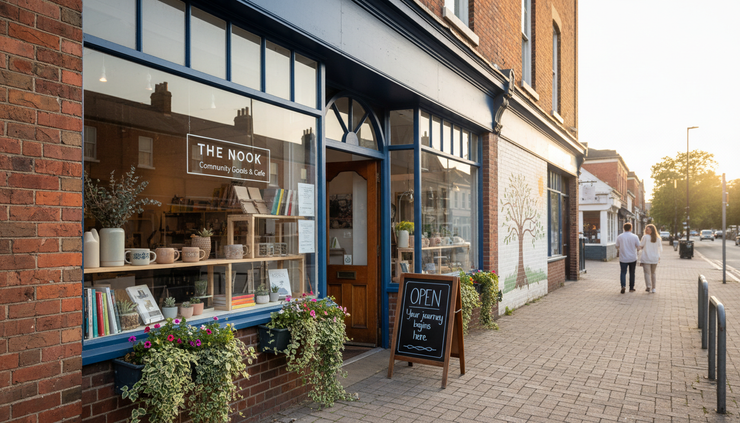
A website works like your digital storefront. Google works like the road that brings people to it. When both are strong, your business becomes easier to find, easier to understand, and easier to choose.
Your website is often the first impression
First impressions used to happen at the front door. Now they often happen on a phone screen.
A customer may visit your website before they know anything else about your business. Within a few seconds, they form an opinion about your quality, reliability, and professionalism. A clear and useful website helps them feel that your business is real, active, and worth their time.
A weak website can create doubt, even if your service is excellent.
Common problems that hurt first impressions include:
Slow loading pages
Broken links
Old photos or outdated information
Confusing menus
Missing prices, hours, location, or contact details
Text that is hard to read on mobile
No clear next step
People do not always give businesses a second chance online. If they cannot find what they need quickly, they move on. A strong website removes friction and helps visitors understand what you offer, who you serve, and how to take action.
That action could be calling, booking, requesting a quote, placing an order, visiting a store, or reading more about your services. The easier the path, the better the result.
Google helps customers find you when they are ready to act
Google is where people go when they already have intent.
They search for things like:
“plumber near me”
“best bakery open now”
“family dentist in my area”
“emergency roof repair”
“custom cabinets near me”
“Italian restaurant with outdoor seating”
These searches are valuable because the person is not just browsing. They need something. A strong Google presence helps your business appear during that decision moment.
Your Google presence includes several parts:
Your website pages
Your Google Business Profile
Your Google Maps listing
Customer reviews
Photos
Business hours
Service descriptions
Location information
Search results that mention your business
When these parts match and support each other, customers get a clear picture. They can see what you do, where you are, when you are open, and whether other people trust you.
For local businesses, this is especially powerful. Many customers do not start by typing a company name. They start by searching for a service. If your business does not appear, you are missing people who may be ready to buy.
A strong website builds trust before the first conversation
Trust is one of the biggest reasons people choose one business over another.
A professional website helps answer the quiet questions customers have before they contact you:
Is this business legitimate?
Do they offer what I need?
Are they experienced?
Do they serve my area?
Can I understand their process?
Do other customers seem satisfied?
Is it easy to reach them?
Your website does not need to be complicated to build trust. It needs to be useful, accurate, and clear.
Strong trust signals include:
Real service pages
Each core service should have its own page with clear explanations. A general list is often not enough. Customers want to know exactly what you provide and how you can help.
Visible contact information
Phone numbers, contact forms, location details, and business hours should be easy to find. Do not make people hunt for the next step.
Customer reviews and testimonials
Reviews help reduce uncertainty. They show that real people have used your business and had a positive experience.
Helpful photos
Real photos of products, work, space, or results can make a business feel more tangible. Stock photos can still be useful in some cases, but real images often create stronger trust.
Clear policies and expectations
If customers need to book ahead, request estimates, visit a location, or prepare for service, explain that early. Clarity lowers hesitation.

Your website turns visitors into leads and sales
Getting traffic is only part of the goal. The website also needs to convert attention into action.
A good business website guides visitors. It does not leave them guessing. Every important page should make the next step obvious.
That might mean:
Call now
Book an appointment
Request a quote
Visit the store
Order online
View the menu
Schedule a consultation
Ask a question
This is where design, content, and structure work together. A pretty website that does not create business is not enough. A strong website explains value and makes action simple.
For example, a home service company may need service pages, emergency contact buttons, proof of insurance, customer reviews, and service area information. A restaurant may need menus, hours, reservations, photos, directions, and online ordering. A retail shop may need product categories, store pickup details, return policies, and inventory highlights.
Different businesses need different websites, but the purpose stays the same: help the right person take the next step with confidence.
Google reviews influence buying decisions
Reviews are one of the most visible parts of your online presence. They can appear in Google Search and Google Maps, often before someone visits your website.
A business with thoughtful, recent reviews looks active and trusted. A business with poor reviews, no reviews, or unanswered complaints may raise concern.
Reviews help customers compare options. They also help explain the experience of working with your business in a way your own marketing cannot. People pay attention to details in reviews, such as punctuality, cleanliness, communication, quality, friendliness, and value.
Responding to reviews matters too.
A simple, professional reply shows that your business pays attention. Thank people for positive feedback. For negative reviews, stay calm, acknowledge the concern, and invite the person to contact you directly if needed.
A good review profile cannot replace strong service, but it can reflect it. When your website and reviews tell the same positive story, customers feel more comfortable choosing you.
A website gives you control over your message
Third-party platforms can help people discover you, but your website is the place you control.
You decide what to explain, which services to feature, what photos to show, and how to present your value. You are not limited to a short profile, a fixed layout, or changing platform rules.
This matters because customers often need more than basic details. They may want to compare service options, understand your process, read about your experience, or learn what makes your business different.
Your website can include:
Detailed service pages
Product information
Pricing guidance
Before-and-after examples
Case examples
Educational articles
Staff or founder story
Service area pages
Booking or quote forms
Answers to common customer questions
Clear content also helps Google understand your business. If your site explains your services well, it gives search engines more context. That can help your pages appear for more relevant searches over time.
Mobile experience can make or break the sale
Most customers will not wait until they are at a laptop to check your business. They search from a phone while walking, sitting in a car, comparing options at home, or making a quick decision during the day.
That makes mobile experience critical.
A mobile-friendly website should:
Load quickly
Fit the screen without pinching or zooming
Have buttons that are easy to tap
Show phone numbers clearly
Make forms short and simple
Keep menus easy to use
Display maps and directions cleanly
Put key information near the top
Small details matter. If a customer cannot tap the phone number easily, they may not call. If the form has too many fields, they may abandon it. If the menu is hard to read, they may choose a competitor.
Mobile is not a smaller version of desktop. It is often the main version customers use.

Your website works for you all day and night
A physical location has hours. A website keeps answering questions after closing time.
Someone may search late at night, during lunch, or on a weekend. If your website has the right information, it can help them decide even when no one is available to answer the phone.
This is one of the biggest returns a website brings back to a business. It saves time while creating opportunity.
A useful website can answer:
What services do you offer?
Where are you located?
What areas do you serve?
How much does it cost, or how do estimates work?
How can someone book?
What should customers expect?
What makes your business a good choice?
When these answers are easy to find, your team spends less time repeating basic information. Customers arrive more informed. Leads can be more qualified because people already understand what you do.
Strong online presence supports word-of-mouth referrals
Word-of-mouth is still powerful. A happy customer tells a friend. A neighbor recommends a contractor. A family member shares the name of a local shop.
But referrals now often go through Google.
A person hears your business name, then searches for it. If your website and Google listing look strong, the referral gets stronger. If the search results look weak, the referral loses momentum.
This is why offline reputation and online presence are connected. A recommendation may start in person, but the decision often finishes online.
A strong website supports referrals by giving people a clear place to learn more. It also prevents confusion. If there are businesses with similar names, your website, location, reviews, and photos help confirm that the customer found the right one.
Your website helps you compete with larger businesses
Small and mid-sized businesses often assume large companies have the advantage online. They may have bigger budgets, more staff, and more content.
But customers do not always want the biggest option. They want the right option.
A clear, helpful, strong local website can compete well when it focuses on what customers actually need. Local knowledge, personal service, fast response, and specialized experience can stand out when explained properly.
For example, a local repair company can create pages for each major service, show real project photos, explain emergency availability, and keep its Google profile updated. A boutique store can show product categories, hours, events, and store pickup options. A medical, wellness, or professional service provider can explain process, credentials, and appointment steps in plain language.
The goal is not to look like a giant company. The goal is to look trustworthy, useful, and easy to choose.
Better visibility can lower wasted marketing spend
A website and Google presence can also improve the return from other forms of marketing.
If someone sees your vehicle wrap, postcard, sign, sponsorship, or print ad, they may still search for your business before contacting you. A weak web presence can waste that interest. A strong one captures it.
The same is true for paid campaigns. Sending traffic to a poor website burns money. Sending it to a clear, relevant page gives each visitor a better chance of becoming a lead or customer.
Your website also gives you data. You can see which pages people visit, which services get interest, where visitors come from, and which contact paths work best. You do not need to become a data expert to benefit from this. Even basic patterns can help you make better business decisions.
For example, if many visitors read one service page but few contact you, the page may need clearer pricing guidance, stronger proof, or a better call-to-action. If mobile visitors leave quickly, the mobile experience may need work.
Fresh content shows that your business is active
An abandoned website creates doubt.
If your last update was years ago, customers may wonder if your hours, services, prices, or team information are still correct. Search engines may also have less reason to view the site as useful.
Fresh content does not mean posting every day. It means keeping important information current and adding helpful material when it makes sense.
Useful updates include:
New service pages
Updated hours and holiday schedules
New photos
Recent project examples
Helpful articles
Seasonal service information
Updated menus or product details
New staff or location information
A well-maintained site signals that the business is alive and paying attention.

Google presence and website quality work best together
A Google listing without a good website can feel incomplete. A good website without Google visibility may not get enough traffic. The two support each other.
Your Google Business Profile helps customers find quick details. Your website gives them depth. Reviews build trust. Photos create familiarity. Maps help with directions. Service pages explain what you do. Contact forms and phone links create action.
Together, they create a path:
The customer searches.
Your business appears.
They check your reviews, hours, and location.
They visit your website.
They understand your offer.
They contact, book, buy, or visit.
Each step should feel easy. If one part is weak, people can drop off.
That is why business success now depends so much on digital presence. It is not only about being online. It is about being findable, credible, clear, and ready when the customer is ready.
What a strong website brings back to the business
A good website is an investment, not just an expense. When built and maintained well, it can bring back value in several ways.
More qualified leads
People who contact you after reading clear service pages often understand what you offer. That can save time and improve close rates.
More calls, bookings, and visits
Clear contact options and strong Google visibility help convert searchers into real business opportunities.
Higher trust
A polished, accurate website helps customers feel safer choosing you, especially when paired with strong reviews.
Better customer experience
When people can find answers quickly, they feel less frustrated and more confident.
Stronger reputation
Your website and Google presence reflect your standards. They show that your business is organized and active.
Long-term visibility
Helpful website content can keep bringing visitors over time. Unlike a one-time ad, a strong page can continue working.
Support for every other marketing effort
Whether someone hears about you from a friend, sign, event, mailer, or search, your website helps finish the decision.
The businesses that win make it easy to choose them
Customers are busy. They compare quickly. They trust what they can understand.
A strong website and Google presence help your business meet people at the exact moment they are looking. They answer questions, reduce doubt, show proof, and guide action. They make your business easier to find and easier to choose.
If your website is slow, unclear, outdated, or missing from important Google searches, it is not just a technical problem. It is a sales problem. It is a trust problem. It is a visibility problem.
Start with the basics. Make sure your website loads well on mobile, explains your services clearly, shows accurate contact information, and connects smoothly with your Google Business Profile. Keep your details current. Ask happy customers for reviews. Add useful content that answers real customer questions.
Your website does not need to be flashy. It needs to be clear, honest, fast, and helpful. When it does that, it becomes one of the most valuable assets your business owns.


Comments