
Indoor Farming Investment Guide
- Aug 29
- 9 min read
How It Generates Revenue and the Best U.S. States for Success
Indoor farming has moved from a niche food concept to a serious investment category. Rising demand for local produce, pressure on water supplies, fragile supply chains, and year-round consumer expectations have made controlled-environment agriculture more attractive to growers, grocers, restaurants, and investors.
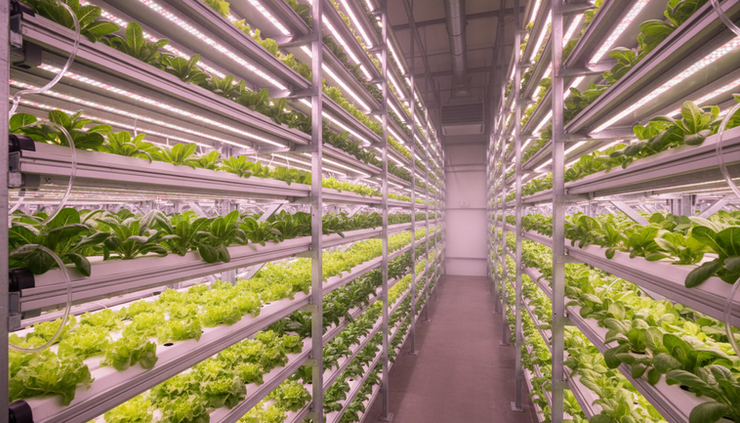
The business is simple to explain but complex to run. Indoor farms grow crops inside warehouses, greenhouses, shipping containers, or purpose-built facilities using controlled light, temperature, humidity, nutrients, and water. The goal is to produce consistent, high-quality crops close to customers, with less exposure to weather, pests, and seasonal limits.
For investors, the question is not only whether the technology works. The real question is whether the operation can sell enough crop volume at strong enough margins to cover energy, labor, rent, packaging, delivery, maintenance, and financing costs.
This guide explains how indoor farming generates revenue, what makes the model attractive, the risks to watch, and which U.S. states offer the strongest fit for this type of business.
Why Indoor Farming Attracts Investors
Indoor farming answers several problems in the traditional food system. Outdoor agriculture depends on land, weather, water access, labor availability, and long transportation routes. Indoor systems reduce some of those variables by bringing production into a controlled space.
That control can create valuable business advantages.
Indoor farms can grow crops 365 days a year. They can produce close to urban markets. They can reduce pesticide use for many crops. They can shorten delivery times and offer a fresher product to buyers. They can also use less water than many field-grown systems, especially hydroponic and aeroponic farms that recirculate water.
The strongest investment case usually appears in crop categories with:
High value per pound
Fast growth cycles
Strong local demand
Short shelf life
Reliable repeat buyers
Premium pricing potential
That is why many indoor farms focus on leafy greens, herbs, microgreens, strawberries, tomatoes, cucumbers, and specialty crops. These products can lose quality quickly during long shipping routes, so local production has a clear advantage.
Indoor farming is not a guaranteed high-margin business. It is capital-heavy and energy-sensitive. But when the farm is placed in the right market, designed at the right scale, and managed with discipline, it can create multiple paths to revenue.
How an Indoor Farming Business Generates Revenue
The main revenue source is crop sales, but the strongest businesses usually build several income streams around the farm.
Selling fresh produce to wholesale buyers
Wholesale sales often form the base of the business. Indoor farms sell to:
Grocery chains
Food distributors
Restaurants
Meal kit companies
Institutional buyers
Specialty food markets
Wholesale buyers care about availability, consistency, food safety, and price. Indoor farms can stand out by offering predictable weekly supply, local delivery, and clean presentation.
The challenge is margin pressure. Grocery and distributor buyers often negotiate hard. A farm that sells only through wholesale channels needs enough production volume and tight operating costs to make the numbers work.
Supplying restaurants and chefs
Restaurants can pay more for specialty greens, herbs, edible flowers, and unique varieties. This model works best near dense food markets where chefs value freshness and local sourcing.
The benefit is higher pricing. The drawback is more sales effort, smaller orders, and possible demand swings. Restaurants may also change menus often, so the farm must manage crop planning carefully.
Selling directly to consumers
Some farms sell through farm subscriptions, local delivery, farmers markets, online ordering, or on-site pickup. Direct-to-consumer sales can bring better margins because the farm sells closer to retail price.
This model requires strong operations beyond growing. Packaging, delivery, customer service, payment systems, and recurring subscriptions all matter. It works best for farms near affluent neighborhoods, health-conscious consumers, or areas with strong interest in local food.
Growing private-label products
A farm may produce greens or herbs under a grocery store’s own brand. Private-label contracts can offer stable volume if the buyer commits to regular purchases.
These agreements can help a farm plan production with more confidence. Still, the buyer may expect strict pricing, packaging standards, and service levels.
Selling seedlings, transplants, or starter plants
Indoor farms with nursery capacity can sell seedlings to outdoor farms, home gardeners, greenhouses, or other controlled-environment operators. This can create seasonal revenue and use existing growing expertise.
The economics depend on local demand, labor needs, and crop type. It can be a useful add-on, especially for farms with propagation rooms.
Licensing technology, training, or farm systems
Some experienced operators earn revenue by advising other farms, selling system designs, or licensing growing methods. This path is usually available only after the company has proven its own farm economics.
Investors should be cautious when a business plan relies heavily on future consulting or technology sales before the core farm is profitable.

The Main Costs Investors Must Understand
Indoor farming can look attractive on revenue forecasts, but costs decide whether the business survives. Before investing, review the assumptions behind every major expense.
Facility and buildout costs
Indoor farms need controlled space. Costs may include rent or land purchase, insulation, racking, grow lights, irrigation, HVAC, dehumidification, water filtration, electrical work, sensors, packing areas, cold storage, and food safety systems.
A shipping-container farm may require less space but can be limited in scale. A greenhouse can use sunlight but may still need heating, cooling, and shade control. A warehouse vertical farm offers dense production but usually has higher lighting and climate-control costs.
Energy costs
Energy is one of the largest operating expenses for many indoor farms. LED lighting, HVAC, pumps, fans, chillers, and dehumidifiers all consume power.
This is why location matters. States with lower electricity rates, access to renewable power, or favorable utility programs can improve the business case. Poor energy planning can erase margins even when crop yields are strong.
Labor and technical management
Indoor farms need growers, harvest crews, packers, maintenance staff, delivery support, and food safety management. Automation can reduce some labor needs, but it does not remove the need for trained operators.
The best farms combine plant science, engineering, logistics, and sales discipline. A weak team can turn a good facility into an expensive experiment.
Packaging, delivery, and spoilage
Fresh produce needs fast handling. Packaging must protect the product, meet buyer specs, and keep shelves attractive. Delivery must be reliable. Spoilage, rejected orders, and poor cold-chain management can reduce profits quickly.
Investors should ask for realistic waste assumptions. A plan that assumes every crop sells at full price is too optimistic.
What Makes an Indoor Farm Profitable
Profitability comes from matching crop, market, facility, and sales channel. A strong indoor farm business plan should answer five questions clearly.
Who is buying the product every week?
Letters of intent, pilot orders, or existing buyer relationships are stronger than general claims about demand.
What crop mix produces the best margin?
A farm may grow beautiful lettuce, but herbs or microgreens might generate better returns in a specific market.
How fast does each crop turn?
Short growth cycles help cash flow. Longer-cycle crops need stronger pricing or larger volume commitments.
What is the energy cost per crop unit?
Investors should understand the cost to grow each tray, head, clamshell, or pound.
How much product can the farm sell before expanding?
Many farms fail by scaling production faster than sales. Capacity only matters if there is a buyer.
The best indoor farming investments are not built around technology alone. They are built around reliable buyers, disciplined costs, and repeatable crop performance.
Best U.S. States for Indoor Farming Investment
No state is perfect for every indoor farming model. The best location depends on energy costs, labor, real estate, water availability, climate, food demand, logistics, and state-level support for agriculture or clean energy.
The states below offer strong conditions for different reasons.
State | Why it fits indoor farming | Best-fit business model |
California | Large consumer market, strong demand for fresh and local produce, water pressure in many regions, major grocery and restaurant networks | Premium greens, herbs, strawberries, specialty produce |
Texas | Large cities, business-friendly environment, logistics advantages, growing population, available industrial space in many areas | Warehouse farms, greenhouse operations, regional distribution |
Florida | Year-round produce culture, strong hospitality sector, humid climate that can challenge outdoor quality, access to major metro markets | Herbs, leafy greens, tomatoes, restaurant supply |
Arizona | Water scarcity creates interest in efficient growing, strong sunlight for greenhouse production, proximity to western markets | Greenhouses, hydroponic greens, controlled-environment produce |
New York | Dense urban demand, strong restaurant and grocery markets, interest in local food, high import dependence for fresh produce in winter | Vertical farms near urban buyers, premium herbs and greens |
New Jersey | Close to New York City and Philadelphia, strong warehouse and logistics base, access to wealthy consumer markets | Urban-adjacent vertical farms, wholesale and direct delivery |
Illinois | Central logistics hub, Chicago-area demand, access to Midwest distribution routes, seasonal outdoor growing limits | Leafy greens, herbs, institutional supply |
Ohio | Lower real estate costs than coastal markets, central location, established agriculture base, access to Midwest and East Coast routes | Mid-scale greenhouse and warehouse farms |
Michigan | Strong agriculture knowledge, cold winters that support local indoor supply value, access to Great Lakes region markets | Greenhouse vegetables, greens, nursery starts |
Colorado | Health-conscious consumers, restaurant demand, interest in local food, dry climate that can help with some controlled systems | Specialty greens, herbs, premium local produce |

How to Choose the Right State and City
Selecting a state is only the first step. A farm’s exact city, utility territory, building, and buyer access matter even more.
A good site should have:
Affordable and reliable electricity
Proper zoning for agricultural production or food processing
Access to clean water
Nearby wholesale and retail buyers
Delivery routes within a practical radius
Suitable ceiling height and load capacity
Strong HVAC and electrical upgrade potential
Workforce availability
Cold storage and packing space
A farm near a premium customer base can justify higher rent if it reduces delivery time and supports better pricing. A farm in a lower-cost region may work better for wholesale volume if it has efficient transportation to major cities.
Do not choose a location only because rent is cheap. Cheap space can become expensive if it needs major electrical upgrades, has poor insulation, lacks loading access, or sits too far from customers.
Indoor Farming Business Models to Compare
Different indoor farming formats have different investment profiles.
Model | Main strengths | Main challenges |
Vertical warehouse farm | High production density, strong control, year-round operation | High energy use, complex climate control, large upfront investment |
Greenhouse farm | Uses sunlight, can scale well, good for tomatoes and cucumbers | Weather still affects operations, heating and cooling costs can be high |
Container farm | Smaller footprint, faster setup, useful for local pilots | Limited scale, higher cost per unit in some cases |
Hybrid farm | Combines greenhouse, vertical systems, and outdoor support | More complex management, requires careful crop planning |
The right model depends on the market. For example, a vertical farm near New York City may focus on premium greens that sell quickly to local buyers. A greenhouse in Arizona may use sunlight while investing heavily in water efficiency and cooling. A warehouse farm in Texas may serve multiple cities through a regional distribution plan.
Key Risks Before Investing
Indoor farming has real promise, but investors should approach projections with discipline.
The biggest risks include:
Overestimating selling price
Premium pricing is possible, but not guaranteed. Buyers compare quality, reliability, and price.
Underestimating energy use
Lighting and climate control can cost more than expected, especially during extreme weather.
Scaling too soon
A larger farm creates larger losses if sales contracts are not ready.
Choosing the wrong crop
Some crops look attractive but take too long to grow or sell at prices that do not justify the cost.
Weak maintenance planning
Pumps, sensors, lights, filters, and HVAC systems need regular care. Downtime can damage crops fast.
Poor food safety controls
Indoor farms still need strict sanitation, traceability, and handling procedures.
Because this is an investment topic, this article is for informational purposes only. It is not financial advice. Every project requires its own market study, financial model, legal review, and operating plan.

What to Look for in an Indoor Farming Investment
A serious investment review should go beyond the pitch deck. Look for proof that the farm can grow, sell, and deliver at the same time.
Useful documents include:
Crop yield records from pilot production
Buyer commitments or purchase history
Energy-use estimates based on real equipment
Labor schedule and staffing plan
Facility lease terms and utility capacity
Crop pricing by sales channel
Packaging and delivery cost estimates
Maintenance budget
Food safety plan
Cash flow forecast with conservative assumptions
The strongest opportunity often has a focused plan. A farm that starts with a few proven crops and a clear buyer base may be safer than one promising many crops, many cities, and rapid expansion all at once.
The Bottom Line for Investors
Indoor farming can generate revenue through wholesale produce, restaurant supply, direct consumer sales, private-label contracts, seedlings, and related services. The business works best when it grows high-value crops near strong demand and keeps energy, labor, packaging, and distribution costs under control.
The best U.S. states for this business are not only the warmest or the biggest. They are the states where indoor production solves a clear market problem. California, Texas, Florida, Arizona, New York, New Jersey, Illinois, Ohio, Michigan, and Colorado each offer strong potential, but for different reasons.
The smartest next step is to test the market before building too much capacity. Secure buyers, model costs conservatively, choose the right crop mix, and match the facility to the revenue plan. In indoor farming, technology matters, but the business succeeds when consistent production meets dependable demand.


Comments