
Investing in Wood Chips Business Ideas for the US Market
Profit Potential and Chinese Machines to Buy
Wood chips look simple, but they can become several sellable products: mulch, animal bedding, smoking chips, compost input, biomass fuel, pellets, playground fiber, and even biochar feedstock. The business works best when the operator controls three things: clean raw material, consistent sizing, and a clear local buyer.
For the US market, wood chips can be a practical small manufacturing business because supply is often local. Tree services, sawmills, land-clearing companies, pallet recyclers, and municipal yard waste programs all generate wood waste. The opportunity is to turn that low-value material into a product that is cleaner, drier, screened, packaged, and easier for customers to use.
This article is for informational planning only. Actual profit depends on your feedstock cost, permits, labor, equipment financing, local demand, transportation, and product quality.

Why wood chips can be a strong business idea in the US
The US has a steady need for wood-based ground cover, fuel, bedding, and soil products. Wood chips are bulky, which makes local production valuable. A customer usually does not want to pay long-distance freight for a low-cost product unless it is specialized, such as food-grade smoking chips or premium animal bedding.
A wood chip business can start small and grow in stages. The basic model is simple:
Secure a source of clean wood.
Chip, grind, screen, dry, or color it.
Sell it in bulk, bags, or wholesale loads.
Add higher-margin products as equipment and demand grow.
The main challenge is not making chips. Many machines can do that. The challenge is making a product that buyers trust every time.
Clean chips should be free from:
Treated lumber
Painted wood
Nails, wire, and metal pieces
Plastic, trash, and demolition debris
Excessive dirt and stones
Moldy or contaminated material
If you plan to sell for animals, food smoking, playgrounds, or soil use, clean sourcing becomes even more important.
What you can make and sell from wood chips
Wood chips are not one product. They are a raw material. The best business idea depends on your market, equipment, and ability to meet quality standards.
Landscape mulch is the easiest entry point
Landscape mulch is one of the most common uses for wood chips. It can be sold to homeowners, landscapers, garden centers, nurseries, and small contractors.
You can sell it as:
Natural hardwood mulch
Colored mulch
Arborist chips
Screened mulch
Bulk mulch by the cubic yard
Bagged mulch for retail customers
Natural mulch is easier to make because it does not need dye equipment. Colored mulch can sell for more, but it requires a mulch colorizer, consistent chip size, safe colorant, water control, and drying space.
Mulch has strong seasonal demand. In many US markets, spring is the biggest sales period. Fall can also be active for landscaping and garden prep.
Animal bedding can create repeat buyers
Wood chips and shavings can be used for bedding, but quality matters. Horse farms, poultry growers, small livestock owners, and pet supply retailers usually want dry, absorbent, low-dust material.
This product may require:
Screening to remove fines
Drying to reduce moisture
Dust collection
Clean wood species
Bagging or compressed bales
Softwood shavings are often preferred for bedding, while some hardwoods may be less absorbent or less desirable for certain animals. Avoid black walnut for horse bedding because it is widely known to be harmful to horses.
Smoking wood chips can bring higher margins
Smoking chips are a smaller-volume, higher-care product. They are sold by wood species, such as hickory, oak, apple, cherry, maple, or mesquite.
This product requires a cleaner process than normal mulch. Buyers expect chips that are:
Species-specific
Untreated and food-safe
Dried to a stable moisture level
Screened to a consistent size
Packaged in clean bags
Free from bark, dirt, metal, and debris
Smoking chips can be sold to barbecue stores, butcher shops, farm stores, online buyers, and local food retailers. The margin can be attractive, but packaging, labeling, and customer trust matter.
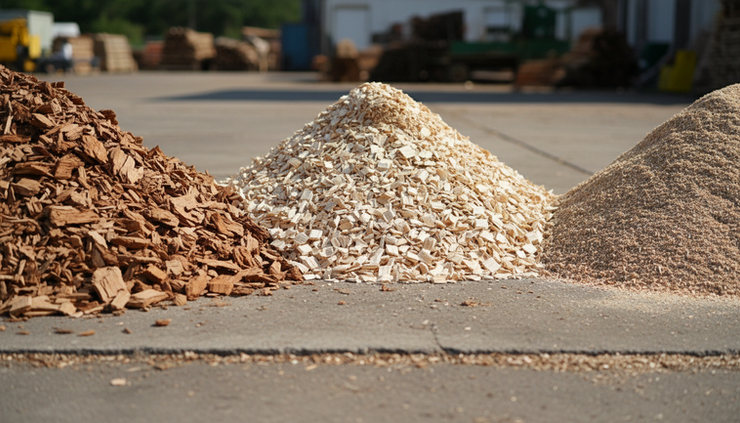
Compost, soil blends, and mushroom substrate can use lower-grade material
Wood chips can be mixed into compost operations as a carbon source. They also work in soil blends, erosion control mixes, and certain mushroom growing systems.
These products can be useful when chips are not premium enough for mulch, bedding, or smoking. For example, fines from screening may be hard to sell as mulch, but they can be useful in compost blends.
Some mushroom growers use hardwood chips or sawdust-based mixes. This is more specialized, and the market is smaller, but it can be profitable near farms, urban growers, and specialty food producers.
Biomass fuel and pellets can use large volumes
Wood chips can be sold as biomass fuel to facilities that can burn wood fuel. They can also be processed into pellets or briquettes.
This path is more industrial. It often needs:
High-volume feedstock
Tight moisture control
Dryers
Hammer mills
Pellet mills or briquette presses
Storage that keeps material dry
Buyers with clear fuel specifications
Biomass fuel can move a lot of material, but margins are usually lower than packaged consumer products. It can still make sense if you have steady supply and nearby industrial buyers.
Biochar can turn chips into a premium soil product
Biochar is made by heating wood in a low-oxygen environment. It can be used as a soil amendment, filtration media, livestock bedding additive, or compost ingredient.
Biochar requires more technical knowledge and the right carbonization equipment. Air emissions, fire safety, and local permits matter. If done correctly, it can turn low-value chips into a higher-value product.
Monthly profit potential by business model
Profit per month can vary widely. A small mulch yard and a packaged smoking chip business have very different costs and margins.
The numbers below are illustrative ranges, not promises. They assume a small to mid-sized US operation that already has a legal site, loader access, basic insurance, and local buyers.
Product model | Typical sales format | Monthly revenue potential | Estimated monthly gross profit before debt, taxes, and owner salary |
Bulk landscape mulch | Cubic yards to landscapers and homeowners | $6,000 to $30,000 | $2,000 to $12,000 |
Bagged mulch | 2-cubic-foot bags to retail or local delivery customers | $7,500 to $35,000 | $2,000 to $10,000 |
Animal bedding | Bags, totes, or bulk loads | $8,000 to $50,000 | $2,500 to $15,000 |
Smoking wood chips | Small retail bags or wholesale cases | $5,000 to $60,000 | $1,500 to $25,000 |
Biomass fuel chips | Tons to fuel users | $5,000 to $40,000 | $1,000 to $8,000 |
Biochar feedstock or finished biochar | Bulk sacks, bags, or farm supply | $6,000 to $50,000 | $2,000 to $18,000 |
A realistic small operation might aim for $3,000 to $10,000 per month in gross profit after building steady local sales. A more developed operation with drying, screening, packaging, and wholesale accounts may reach higher numbers.
Net profit will be lower after:
Equipment payments
Rent or land costs
Labor
Fuel and maintenance
Insurance
Packaging
Freight
Waste disposal
Permits and testing
Sales returns or rejected loads
The best profit usually comes from moving up the value chain. Raw chips are cheap. Screened, dried, packaged, labeled, and species-specific products sell for more.
A simple wood chip business plan for a US startup
Start with the buyer, not the machine. Many new operators buy equipment first, then search for customers. That can trap cash in machines that do not match demand.
A better path looks like this.
Secure feedstock before spending heavily
Talk to tree services, sawmills, pallet recyclers, municipal yards, and land-clearing contractors. Ask what they produce, how often, and whether the material is clean.
Good feedstock agreements answer:
Wood species
Average moisture
Chip size
Contamination risk
Delivery schedule
Tipping fees or purchase cost
Who pays freight
Seasonal volume changes
If a supplier gives you mixed debris, the low price may not matter. Sorting trash from chips wastes labor and can damage machines.
Choose one main product first
Pick the easiest product to sell in your local market. For many US startups, that is bulk mulch or simple screened chips. Once cash flow improves, add bagging, dyeing, drying, or specialty products.
A strong first product should have:
Local demand
Simple quality rules
Low packaging cost
Easy delivery
Repeat buyers
Build around moisture and screening
Moisture affects weight, mold, storage, fuel value, packaging, and customer satisfaction. Screening affects appearance and performance.
A basic production line may include:
Infeed conveyor
Chipper or grinder
Magnetic separator
Screen or trommel
Dryer if needed
Coloring, pelletizing, or bagging equipment
Storage bins or covered piles
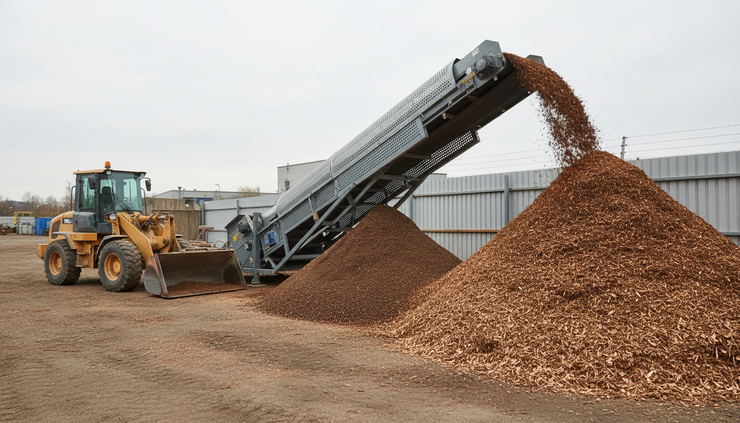
Chinese machines to buy for a wood chips business
China has many manufacturers that sell wood processing equipment to US buyers through Alibaba, Made-in-China, Global Sources, direct websites, and machinery brokers. The goal is not to buy the cheapest machine. The goal is to buy a machine that can run safely, get parts, and meet your production needs.
Below are machine categories to research, along with China-based suppliers commonly found on B2B machinery platforms. Verify every supplier before ordering.
Machine | What it does | Useful for | Chinese suppliers to research |
Drum wood chipper | Turns logs, slabs, and branches into chips | Mulch, biomass fuel, paper-grade chips | Shandong Yulong, Zhengzhou Leabon, Henan Kowloon, Zhangsheng Machinery |
Disc wood chipper | Produces chips from smaller logs and branches | Small mulch yards, biomass feedstock | Zhengzhou Leabon, Shuliy Machinery, Fote Machinery |
Wood crusher or hammer mill | Reduces chips into smaller particles | Bedding, pellets, briquettes, compost blends | Shandong Yulong, Anyang GEMCO, Shuliy Machinery |
Trommel screen or vibrating screen | Separates fines, oversize pieces, and sellable chips | Mulch, animal bedding, smoking chips | Henan Kowloon, Zhengzhou Leabon, Zhangsheng Machinery |
Rotary drum dryer | Lowers moisture content | Pellets, bedding, smoking chips, packaged products | Shandong Yulong, Anyang GEMCO, Zhengzhou Leabon |
Pellet mill | Compresses dried wood particles into pellets | Fuel pellets, animal bedding pellets | Shandong Yulong, Anyang GEMCO, Richi Machinery |
Briquette press | Compresses wood waste into blocks or logs | Fire logs, fuel briquettes | Anyang GEMCO, Shuliy Machinery, Zhengzhou Leabon |
Carbonization furnace | Converts chips or briquettes into charcoal or biochar | Biochar, charcoal products | Shuliy Machinery, Zhengzhou Leabon |
Mulch coloring machine | Mixes chips with colorant and water | Colored landscape mulch | Search Chinese mulch colorizer suppliers and verify US dye compatibility |
Automatic bagging machine | Weighs and fills bags | Mulch, bedding, smoking chips, pellets | Zhengzhou Vtops, Shanghai Soontrue, Shuliy Machinery |
Supplier names can change, and product quality varies by model. Ask for video of the exact machine, customer references, spare parts lists, manuals in English, electrical diagrams, and a written warranty.
What to check before importing machinery from China
Buying direct from China can save money, but mistakes can be expensive. A machine that arrives without proper guarding, parts, or electrical compatibility can sit unused for months.
Check these items before paying a deposit.
Electrical compatibility matters
Many US industrial sites use 240V or 480V three-phase power. Confirm voltage, frequency, motor type, control panel specs, and whether the system can be serviced by a US electrician.
Ask for:
Electrical drawings
Motor nameplate photos
Control cabinet photos
English operating manual
Emergency stop locations
Safety guarding photos
Freight and landed cost can change the deal
The quoted machine price is not the total cost. Your landed cost may include ocean freight, port fees, customs broker fees, tariffs, trucking, unloading, setup, wiring, spare parts, and local fabrication.
Clarify the trade term before ordering. Common terms include FOB, CIF, and DDP. If you are new to importing, work with a customs broker and freight forwarder.
Safety and compliance are not optional
US operators need to think about OSHA rules, machine guarding, dust management, fire risk, noise, lockout procedures, and employee training. Wood dust can burn, and piles of chips can heat if stored incorrectly.
For some products, standards may apply. Playground wood fiber, for example, may need testing and certification. Animal bedding and food smoking chips carry higher customer safety expectations.
Equipment budget ranges to plan around
Prices change often, so treat these as rough planning ranges for new imported equipment before full landed costs.
Equipment type | Rough machine price range before full landed costs |
Small branch chipper | $2,000 to $10,000 |
Medium drum or disc chipper | $8,000 to $50,000 |
Hammer mill or wood crusher | $3,000 to $25,000 |
Trommel or vibrating screen | $5,000 to $40,000 |
Rotary dryer | $10,000 to $80,000 or more |
Pellet mill line | $20,000 to $150,000 or more |
Bagging machine | $3,000 to $40,000 |
Carbonization furnace | $8,000 to $100,000 or more |
A small mulch operation may begin with a chipper, loader, screen, truck, and storage area. A higher-margin packaged product line may need drying, screening, dust control, bagging, labeling, pallets, and covered storage.

The best products to start with
For most first-time operators, the easiest path is:
Bulk natural mulch
Screened landscape chips
Bagged mulch or bedding
Smoking chips if clean hardwood species are available
Pellets, briquettes, or biochar after demand is proven
Bulk mulch is forgiving and local. Smoking chips can pay more per pound but require stricter sourcing and packaging. Pellets and biochar can be profitable, but they need more machinery and better process control.
The smartest approach is to sell the same raw material in grades. Large clean chips can become mulch. Smaller screened material can become compost input. Clean hardwood pieces can become smoking chips. Fines can be used in pellets, briquettes, or soil blends.
Final takeaway
A wood chips business can work in the US when it is built around real buyers, clean supply, and the right processing line. Monthly gross profit can range from a few thousand dollars for a small local mulch yard to much higher levels for packaged, dried, or specialty products.
Start with one product, prove demand, then add machines that improve quality or open a better market. Chinese machines can help reduce startup cost, but vet suppliers carefully, confirm electrical and safety details, and calculate the full landed cost before you order. The profit is not in the chips alone. The profit is in turning local wood waste into a consistent product customers are ready to buy again.


Comments