
Is Investing in a Wood Business in Canada Worth It and Where Should You Start
Canada is one of the few countries where a wood business can sit close to both the forest and the customer. That is a real advantage. The country has large timber resources, established sawmill and building supply networks, skilled trades, export routes, and steady demand from construction, renovation, furniture, packaging, and biomass markets.
But wood is not an easy “buy a machine and get rich” business. Margins can be thin, equipment is expensive, raw material prices move, and permits matter. A good wood business in Canada starts with choosing the right niche, not simply choosing “wood” as a broad industry.
This article is informational only and not financial, legal, or tax advice. Costs and profit examples are illustrative. Always verify local rules, supplier pricing, insurance, and market demand before investing.

Is a wood business in Canada worth investing in?
Yes, it can be worth it, but only if the business has a clear market and cost control. Canada has strong long-term demand for lumber, engineered wood, pallets, fencing, decking, millwork, firewood, and custom wood products. The country also has a culture of home renovation, cottage ownership, outdoor living, and construction in wood-framed buildings.
The opportunity is strongest in three areas:
Value-added wood products Furniture, cabinetry, custom millwork, flooring, paneling, and specialty cuts usually earn more per board foot than basic lumber resale.
Local service-based wood businesses Portable sawmilling, kiln drying, firewood delivery, fence building, deck materials, and reclaimed wood sales can work well because customers pay for convenience.
Industrial supply Pallets, crates, packaging lumber, wood chips, biomass fuel, and construction lumber can sell in larger volumes, but they often require more capital and tighter operations.
The main risk is that wood is heavy, seasonal, and price-sensitive. Storage space, drying time, transportation, waste, and equipment maintenance all affect profit. A business that looks profitable on paper can lose money if lumber sits too long, warps, gets wet, or costs too much to move.
A wood business is most attractive when it has at least one of these advantages:
Access to steady logs, lumber, or reclaimed material
A nearby customer base that pays for finished products
Skills in woodworking, milling, construction, or sales
Space for storage, drying, and safe equipment use
A product that solves a specific local need
Where should you start?
Start smaller than your ambition. Many wood businesses fail because they buy costly machinery before they prove demand. A better path is to test one narrow offer, track costs carefully, and grow into equipment as orders justify it.
Choose the customer before the machine
The first question is not “Should I buy a sawmill?” It is “Who will pay me, and for what?”
Examples:
Homeowners may buy firewood, fence boards, live-edge slabs, custom shelving, and garden beds.
Contractors may buy trim, decking, framing lumber, blocking, pallets, and specialty cuts.
Farmers may need fence posts, gates, animal bedding, crates, and rough lumber.
Restaurants, lodges, and cottage owners may buy rustic tables, benches, paneling, and outdoor furniture.
Manufacturers may need pallets, dunnage, crates, or custom packaging.
Once the customer is clear, the business model becomes easier to choose.
Validate demand with low-risk sales
Before spending CA$100,000 on equipment, try selling with rented tools, subcontracted milling, or purchased lumber. For example, a future furniture maker can start with bought kiln-dried lumber and build custom tables. A future sawmill operator can first sell slabs milled by a local operator. A firewood seller can test one season using rented splitting equipment.
This step reveals real numbers:
What customers ask for most
How long production takes
What delivery costs
Which products create waste
What price customers resist
Whether repeat orders exist
Learn local rules early
Rules vary by province, municipality, and land type. Depending on the model, a wood business may need:
Business registration
Sales tax registration
Municipal zoning approval
Firewood movement compliance in pest-sensitive areas
Forestry permits or timber rights
Environmental approvals for larger processing
Workplace safety coverage
Insurance for equipment, liability, vehicles, and property
Building or electrical permits for shops and kilns
If you plan to harvest timber, do not treat standing trees as “free inventory.” Harvesting rights, sustainable forest management rules, Indigenous rights and consultation duties, road access, and scaling requirements can be complex. Many small investors are better off buying logs or lumber from established suppliers at first.
What types of wood businesses are most suitable?
The best option depends on budget, skill, location, and appetite for risk. For many new investors, the most suitable wood businesses are not the largest ones. They are the ones with manageable startup costs and clear local buyers.
Wood business type | Good fit for | Startup difficulty | Profit potential | Main risk |
Firewood sales | Rural or cold-climate areas near homes and cottages | Low to medium | Moderate | Seasonality and labor |
Portable sawmilling | Areas with private woodlots, farms, and custom builders | Medium | Moderate to good | Equipment maintenance and inconsistent jobs |
Custom furniture | Skilled woodworkers near higher-income markets | Medium | Good | Slow production and customer acquisition |
Cabinetry and millwork | Experienced tradespeople and renovation markets | High | Good to strong | Labor, precision, and shop overhead |
Pallet and crate manufacturing | Industrial zones near warehouses and factories | High | Moderate at scale | Low margins and volume pressure |
Kiln drying and slab sales | Regions with sawmills and makers | Medium | Good | Drying defects and inventory time |
Wood pellets or biomass | Investors with large supply contracts | Very high | Scale-dependent | Capital cost and feedstock supply |
Firewood is simple, but not effortless
Firewood can be a good first wood business in Canada because the demand is easy to understand. Customers include homeowners, cottage owners, campgrounds, lodges, and rural properties.
The startup costs can be relatively low compared with a sawmill or cabinet shop. You may need a chainsaw, splitter, truck or trailer, storage area, moisture meter, safety gear, and possibly a small loader as volume grows.
The challenge is labor. Cutting, splitting, stacking, seasoning, loading, and delivery take time. Wet wood leads to complaints. Pest rules can limit long-distance movement. Profit improves when the business sells properly seasoned wood, offers reliable delivery, and serves a tight local radius.
Portable sawmilling is a strong small-business option
Portable sawmilling can be attractive because customers often provide the logs. The business earns from milling service, custom cutting, or selling lumber from purchased logs.
This model suits rural areas with farms, private woodlots, storm-fallen trees, and custom builders. It can also serve people who want sentimental trees turned into beams, slabs, or boards.
Costs include the mill, blades, maintenance, transport, fuel, log handling tools, safety gear, and insurance. The upside is flexibility. The downside is that jobs can be uneven, and bad logs waste time.
Custom furniture and slabs can earn higher margins
Live-edge tables, benches, shelves, mantels, and custom furniture can sell for higher prices than commodity lumber. Canada has strong markets for rustic, modern, and cottage-style wood products.
This model works best near cities, tourist regions, cottage country, and affluent renovation markets. The key is drying. Furniture customers expect stable wood. Green slabs may crack or warp if sold too soon.
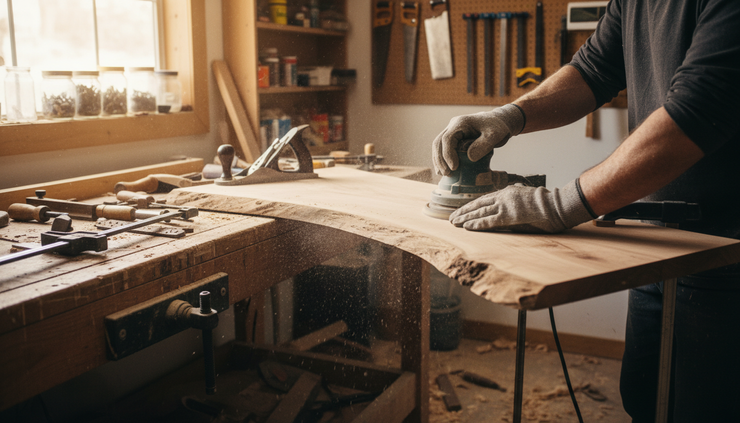
A furniture or slab business needs woodworking skill, good photography of finished pieces, safe shop space, sanding and finishing tools, and patience. It is not as simple as cutting a slab and listing it for sale.
Cabinetry and millwork are profitable but skill-heavy
Cabinetry, trim, doors, stairs, built-ins, and architectural millwork can be among the more profitable wood businesses. Customers pay for fit, finish, design, installation, and reliability.
This is not the easiest starting point for a beginner. It needs precision tools, skilled labor, finishing space, design ability, and strong project management. Mistakes are costly because custom pieces must fit real rooms and pass customer expectations.
For an experienced carpenter or shop owner, though, cabinetry and millwork can be a strong business in provinces with steady renovation and housing activity.
What are the startup costs?
Startup costs vary widely. A small firewood operation can begin with a modest budget if equipment is used and volume is low. A full sawmill, kiln, or cabinet shop can require serious capital.
Here are broad planning ranges in Canadian dollars.
Business model | Possible startup range | What the money usually covers |
Small firewood operation | CA$10,000 to CA$50,000 | Chainsaws, splitter, trailer, safety gear, storage, basic insurance |
Portable sawmilling service | CA$30,000 to CA$150,000 | Portable mill, blades, trailer, log tools, fuel, maintenance, insurance |
Slab and kiln-dried lumber sales | CA$50,000 to CA$250,000 | Lumber supply, kiln access or kiln purchase, storage, handling equipment |
Custom furniture shop | CA$25,000 to CA$150,000 | Tools, dust collection, finishing area, lumber inventory, workspace |
Cabinetry or millwork shop | CA$100,000 to CA$500,000+ | Shop space, saws, CNC or panel tools, finishing equipment, labor, vehicles |
Pallet or crate production | CA$150,000 to CA$1 million+ | Industrial space, saws, nailers, forklifts, lumber contracts, staff |
The biggest hidden costs are often storage, waste, and time. Lumber needs dry space. Logs need room and machinery. Finished products need protection. Firewood needs seasoning time before sale.
Plan for these recurring costs:
Raw logs, lumber, slabs, or reclaimed wood
Rent or mortgage for land, yard, or shop
Electricity, fuel, heat, and kiln energy
Blades, bits, sandpaper, glue, finish, fasteners, packaging
Vehicle costs, delivery, and repairs
Insurance and permits
Labor, payroll costs, and safety training
Bookkeeping, accounting, and tax
Waste handling and disposal
A common mistake is underpricing labor. If a table takes 18 hours to build, sand, finish, communicate about, and deliver, the price must pay for more than the wood.
What profits can you expect?
Profit depends on the niche. Commodity wood businesses usually run on lower margins and need volume. Custom and service-based wood businesses can earn higher margins, but they need skill and strong customer demand.
A simple way to think about profit is:
Profit comes from the spread between material cost, processing cost, selling price, and how fast inventory turns into cash.
Here is how the models tend to compare.
Business type | Revenue pattern | Margin pattern |
Firewood | Seasonal, with strong fall and winter demand | Moderate if delivery radius is controlled |
Portable sawmilling | Job-based service income | Good when travel and setup time are priced correctly |
Slab sales | Slower sales, higher price per piece | Good if drying losses are controlled |
Furniture | Project-based and custom | Strong on premium work, weaker on underpriced labor |
Cabinetry | Larger contracts | Good, but overhead and rework can reduce profit |
Pallets | Repeat industrial sales | Lower margin, needs scale and efficiency |
For example, a firewood seller may appear profitable when comparing a cord’s selling price to the cost of logs. But true profit also includes fuel, labor, stacking, seasoning space, delivery time, equipment wear, and unsold inventory.
A custom furniture maker may earn a strong gross margin on a table, but only if pricing includes design time, customer messages, shop cleanup, finishing delays, and delivery.
The best early goal is not maximum revenue. It is proving repeatable profit on one product line.

Which Canadian province is best for a wood business?
Canada does not have states. It has provinces and territories. The best province depends on the type of wood business.
British Columbia, Quebec, and Ontario are strong general choices because they combine forest resources, infrastructure, and large customer markets. Alberta can be strong for construction-related wood, pallets, agricultural uses, and oilfield or industrial packaging in some regions. The Atlantic provinces can work well for smaller wood products, sawmilling, exports, and local craft markets, but population density and logistics matter.
Province or region | Best-fit wood businesses | Why it can work |
British Columbia | Sawmilling, specialty lumber, timber products, custom woodwork | Major forest sector, export routes, strong wood culture |
Quebec | Furniture, cabinetry, flooring, sawmilling, pallets | Large manufacturing base and strong local market |
Ontario | Cabinetry, millwork, pallets, furniture, firewood | Big population, renovation demand, industrial customers |
Alberta | Construction lumber supply, pallets, farm wood products, firewood | Strong construction and agricultural markets |
New Brunswick and Nova Scotia | Small sawmills, firewood, specialty wood, export-oriented products | Forest access and regional wood tradition |
Manitoba and Saskatchewan | Farm lumber, pallets, firewood, fencing | Agricultural demand and lower land costs in some areas |
Best province for a beginner
For a beginner selling to local customers, Ontario is often one of the most practical starting points. It has a large customer base, many renovation markets, cottage regions, rural woodlots, and industrial buyers. The downside is higher competition and higher property costs near major cities.
Best province for forest access
British Columbia is strong for forest-related businesses, but regulatory complexity, terrain, transport, and established competition can be serious factors. It is better suited to investors who understand forestry, milling, or specialty lumber.
Best province for manufacturing
Quebec has a strong base for furniture, flooring, cabinetry, and manufacturing. It may suit investors who want to make finished or semi-finished products rather than only sell raw wood.
Best lower-cost rural opportunity
Parts of New Brunswick, Nova Scotia, Manitoba, and Saskatchewan may offer lower property or yard costs than the largest urban regions. These areas can suit firewood, small sawmills, fencing, farm supply, and specialty products if the local market is large enough.
The most suitable wood business for a new investor
For most first-time investors, the best starting choices are:
Portable sawmilling
Firewood with delivery
Slab drying and specialty lumber
Simple outdoor wood products
Custom furniture if the skill already exists
Portable sawmilling is often the most balanced option. It has real equipment costs, but it does not require the same inventory risk as a retail lumber yard. Customers may supply logs, and the service can expand into slab sales, kiln drying, beams, and custom lumber.
Firewood is the easiest to understand, but it is physically demanding and seasonal. It works best when there is nearby demand, a reliable wood supply, and covered storage.
Cabinetry and millwork can be excellent businesses, but they are better for experienced tradespeople. Pallet production can also work, but it usually needs larger capital, repeat contracts, staff, and industrial space.
A practical starting plan
A cautious six-step plan can reduce risk.
1. Pick one narrow product
Do not start with “wood products.” Start with one offer, such as kiln-dried live-edge shelves, delivered firewood, portable milling for farms, cedar planter boxes, or custom mantels.
2. Check supply before demand grows
Confirm where the wood will come from. Ask about minimum orders, delivery cost, moisture content, species, grading, and seasonality. If suppliers are unreliable, sales will suffer.
3. Price every step
Include material, labor, waste, fuel, rent, equipment wear, delivery, payment fees, and taxes. If the price looks too high for the market, choose a different product before buying equipment.
4. Sell a small batch
Make or source a small batch and test real sales. Paid orders teach more than opinions. Track which item sells fastest and which questions customers ask.
5. Buy equipment only after proof
Equipment should solve a proven bottleneck. If sanding takes too long, buy better sanding tools. If drying limits sales, look at kiln options. If transport eats profit, change delivery rules or vehicle setup.
6. Build safety and compliance into the business
Wood businesses involve blades, dust, noise, lifting, vehicles, and fire risk. Insurance, dust control, protective gear, safe storage, and training are not extras. They protect the investment.

Final verdict
Investing in a wood business in Canada can be worth it when the business is specific, local demand is proven, and costs are tracked from the start. The safest path is usually not a large mill or manufacturing plant. It is a focused service or product that can grow step by step.
For a new investor, portable sawmilling, firewood delivery, slab sales, and simple custom products are often the most realistic entry points. For experienced tradespeople, cabinetry, millwork, and furniture can produce stronger profits. For larger investors, pallets, crates, kiln drying, and industrial wood products may work if supply contracts and buyers are secure.
Start with the customer, not the machinery. Choose one province based on supply, buyers, land cost, and rules. Test the market with a small offer. Then invest in equipment only when the numbers prove the business can pay for it.


Comments