
Top Boring Businesses to Invest in Now Across Canadas Major Cities
- Aug 29
- 8 min read
The best business investments are not always the ones people brag about. In Canada, many steady opportunities sit in plain sight: snow removal, laundromats, storage, property maintenance, auto repair, waste hauling, and other services people keep paying for in good times and bad.
These are “boring” businesses because they rarely make headlines. That is also the point. They often serve repeat needs, rely on local demand, and can be easier to understand than trend-driven ventures. For investors and operators, the appeal is simple: clear demand, practical operations, and room to improve an existing business.
This article is informational only and is not financial, legal, or tax advice. Any acquisition or startup decision should include proper due diligence, local market research, financing review, and professional advice.

What makes a boring business attractive in Canada
A good boring business usually has several traits:
Recurring demand
Customers need the service monthly, seasonally, or every year.
Local competition
The business competes neighborhood by neighborhood, not always against national giants.
Simple value
Customers understand what they are buying and why they need it.
Operational upside
Better scheduling, cleaner service, improved equipment, and stronger customer follow-up can raise performance.
Resilience
People still need repairs, cleaning, storage, waste removal, and basic care during slower economic periods.
The strongest boring businesses to invest now in Canada are usually tied to daily life: housing, vehicles, weather, food, family care, and maintenance. The best choice depends heavily on the city.
Best boring business ideas by major Canadian city
Canada is not one market. Toronto buyers face different costs and customer needs than investors in Halifax, Regina, or Victoria. Here are practical business ideas suited to major Canadian cities and why they fit.
City | Boring business to consider | Why it fits |
Toronto | Property maintenance and small multi-unit cleaning | Dense housing, condos, rentals, and commercial strips create steady maintenance needs. |
Montreal | Laundromats and appliance repair | Many renters, older buildings, and neighborhood-based services support repeat demand. |
Vancouver | Storage, moving support, and home organization | High housing costs and smaller living spaces create demand for storage and relocation services. |
Calgary | HVAC service and garage door repair | Weather swings, detached homes, and suburban growth support repair-focused trades. |
Edmonton | Snow removal and equipment rental | Long winters and practical industrial demand make seasonal and tool-based services useful. |
Ottawa | Home care support services and residential cleaning | A stable employment base and aging households create demand for dependable in-home services. |
Winnipeg | Pest control and insulation services | Cold weather, older housing stock, and seasonal pests support essential home services. |
Quebec City | Specialty cleaning and building maintenance | Heritage buildings, tourism-related properties, and residential density need routine care. |
Hamilton | Auto repair and tire shops | Commuting, older vehicles, and industrial neighborhoods support vehicle services. |
Kitchener-Waterloo | Student housing maintenance and turnover cleaning | Rentals, students, and young professionals create repeat property service cycles. |
Halifax | Plumbing, drainage, and moisture control | Coastal weather and older homes create ongoing repair and prevention needs. |
Victoria | Landscaping and senior-friendly home services | Mild weather, older homeowners, and year-round yards support steady service work. |
Saskatoon | Agricultural equipment repair support and light industrial services | Regional farming and trades demand practical maintenance and repair options. |
Regina | Parking lot maintenance and snow clearing | Wide streets, winter conditions, and commercial properties need predictable service. |
London | Dental support services, cleaning, and local courier routes | Health services, schools, and suburbs create practical recurring demand. |
Windsor | Auto-adjacent services and small logistics | Cross-border activity and vehicle culture make transport and repair services relevant. |
Ontario cities reward density and repeat service
Ontario’s major cities have a clear advantage for “boring” operators: dense demand. More homes, renters, vehicles, clinics, strip plazas, and small commercial properties mean more recurring service needs within a smaller radius.
Toronto
Toronto is expensive, but it also offers one of Canada’s deepest pools of customers. A full-scale startup can be costly, so smaller service niches often make more sense than high-rent storefronts.
Strong boring business options include:
Condo cleaning and garbage room maintenance
Small building repairs for landlords
Mobile car detailing in residential areas
Appliance repair
Junk removal for renters and homeowners
The practical edge in Toronto is route density. A cleaning, repair, or maintenance company can serve many nearby customers in one day if scheduling is tight.
Ottawa
Ottawa’s strength is stability. Government, education, health care, and professional households create dependable demand for home services.
Good fits include:
Residential cleaning
Senior home support services
Lawn care and snow removal packages
Handyman services
Small-scale property management support
A business that combines summer and winter services can reduce seasonal swings.
Hamilton, London, Kitchener-Waterloo, and Windsor
These cities often offer a more approachable entry price than Toronto. They also have strong demand from commuters, students, manufacturers, landlords, and families.
In Hamilton, auto repair, tire service, and property maintenance fit well. In London, cleaning, courier routes, and health-adjacent services can work. Kitchener-Waterloo has student housing turnover and rental maintenance demand. Windsor suits auto-adjacent services, small logistics, and repair shops.

Quebec markets favor neighborhood trust
Quebec’s main urban markets often reward local reputation, language fit, and strong neighborhood presence. Buyers should pay close attention to customer relationships, supplier ties, and local regulations.
Montreal
Montreal is well suited to laundromats, appliance repair, cleaning services, and small food-service support businesses. Many residents live in apartments, and older buildings create regular maintenance needs.
A laundromat can look simple from the outside, but the details matter. Equipment age, utility costs, rent terms, and nearby competition can decide whether the business is attractive. Appliance repair can be a lower-overhead alternative if the operator has trade skill or can retain reliable technicians.
Quebec City
Quebec City has tourism, older buildings, government activity, and stable residential neighborhoods. That mix supports specialty cleaning, snow clearing, maintenance, and small hospitality support services.
Good examples include:
Linen delivery for small accommodations
Deep cleaning for rental units
Heritage property maintenance support
Snow and ice management
Small café equipment repair
The key is local trust. In service businesses, a dependable operator with fast response times can stand out more than a flashy brand.
Western Canada favors weather, trades, and practical infrastructure
Western Canadian cities often reward hands-on businesses tied to homes, vehicles, weather, energy use, and equipment. Many of these businesses are not glamorous, but they solve problems that cannot wait.
Calgary
Calgary’s housing mix, weather changes, and suburban spread make home services attractive. HVAC, garage door repair, roofing maintenance, and basement water prevention can all be strong categories.
The best targets are not always the largest companies. A smaller business with repeat customers, trained technicians, and weak administration may have room for improvement.
Edmonton
Edmonton’s winters create obvious demand for snow removal, heating services, equipment rental, and vehicle maintenance. Industrial activity also supports small repair, parts, and tool-related businesses.
A snow removal company can pair well with summer landscaping. Equipment rental or small engine repair can also serve contractors, homeowners, and local trades.
Vancouver
Vancouver has high real estate costs and limited household space. That makes storage, moving support, home organization, and renovation-adjacent services worth studying.
Self-storage is capital intensive, so investors may also look at smaller related businesses:
Portable storage delivery
Moving supplies
Furniture assembly
Junk removal
Short-notice moving labor
These services fit customers who move often, downsize, or live in compact spaces.
Victoria
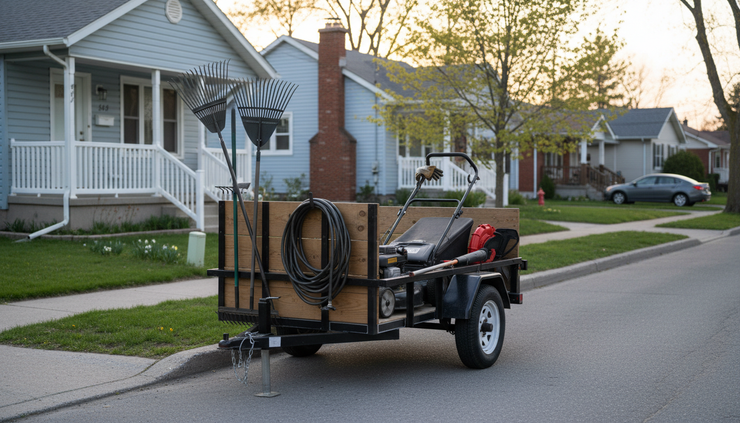
Victoria’s mild climate supports landscaping, garden maintenance, exterior cleaning, and senior-friendly home services. The city’s older housing and aging population also create demand for small repairs and accessibility improvements.
A boring but useful business here might install handrails, improve lighting, manage yards, clean gutters, and coordinate regular home upkeep.
Prairie and Atlantic cities reward reliability
Smaller major cities can be excellent places for boring businesses because reputation travels quickly. A dependable operator can win long-term customers through consistency.
Winnipeg
Winnipeg’s climate and housing stock support pest control, insulation, heating repair, and basement moisture services. These are practical, urgent needs for homeowners and landlords.
Pest control in particular can create repeat service contracts, especially for multi-unit residential buildings, restaurants, and property managers. Licensing, safety, and training matter, so this is not a casual side project.
Regina and Saskatoon
Regina and Saskatoon both support snow clearing, parking lot maintenance, light equipment repair, and services tied to agriculture and trades. The customer base may be smaller than Toronto or Vancouver, but operating costs can also be more manageable.
In Saskatoon, agricultural support services can be attractive if the operator understands the market. In Regina, commercial maintenance, sweeping, line painting, and winter lot care can create recurring contracts.
Halifax
Halifax has coastal weather, older homes, student rentals, and growing residential demand. Plumbing, drainage, moisture control, roofing maintenance, and rental turnover services all fit the city.
A business that responds quickly after storms or heavy rain can build a strong reputation. Property owners often value prevention because water damage can become expensive fast.
How to evaluate a boring business before investing
A boring business can still be a bad investment if the numbers, staff, or local market do not hold up. Before buying or funding one, study more than the asking price.
Check repeat revenue
Look for customers who return without heavy sales effort. Examples include monthly cleaning contracts, annual HVAC service plans, snow removal agreements, storage rentals, and property maintenance contracts.
Repeat revenue does not guarantee success, but it can make revenue easier to forecast.
Review owner dependence
Many small businesses rely heavily on the current owner. If the owner handles sales, scheduling, customer relationships, and technical work, the transfer may be risky.
Ask what happens if the owner leaves for 30 days. If the answer is “everything stops,” price the risk carefully.
Inspect equipment and leases
Boring businesses often depend on physical assets. Trucks, washers, lifts, snowplows, tools, and HVAC equipment all age. A low purchase price may hide expensive replacement needs.
For storefront businesses, review lease terms, renewal options, utility costs, and zoning rules.
Understand labor availability
Many service businesses need skilled, reliable workers. Technician shortages, high turnover, and wage pressure can hurt margins. A business with trained staff and low turnover may deserve closer attention.
Study local competition
A simple Google search is not enough. Call competitors as a customer. Compare response speed, pricing style, service guarantees, and professionalism. In many boring industries, the first company to answer the phone already has an edge.
Boring does not mean passive
The biggest mistake is treating a boring business like a bond. Most are operating businesses, not passive investments. Even if a manager runs daily work, ownership still requires oversight.
Common risks include:
Weather variability
Equipment breakdowns
Staff shortages
Insurance costs
Local licensing rules
Customer concentration
Lease renewals
Fuel and utility costs
The upside is that these risks are often understandable. You can inspect a truck, read a lease, review invoices, and count repeat customers. That clarity is part of the appeal.

The best pick depends on the city and the operator
There is no single best boring business across Canada. The smarter approach is to match the business to the city’s daily needs and the operator’s strengths.
For a hands-on tradesperson, HVAC, plumbing support, appliance repair, or garage door service may fit. For a process-driven investor, laundromats, storage, cleaning contracts, or route-based services may be easier to manage. For someone with strong local relationships, property maintenance, senior home support, or commercial cleaning can build slowly and steadily.
The best boring businesses are not exciting on day one. They become attractive through repeat customers, clean books, reliable staff, and disciplined operations. In Canada’s major cities, that kind of opportunity is everywhere, if you are willing to look past the flashy ideas and study the services people actually need.


Comments